


.svg)
.svg)


.svg)


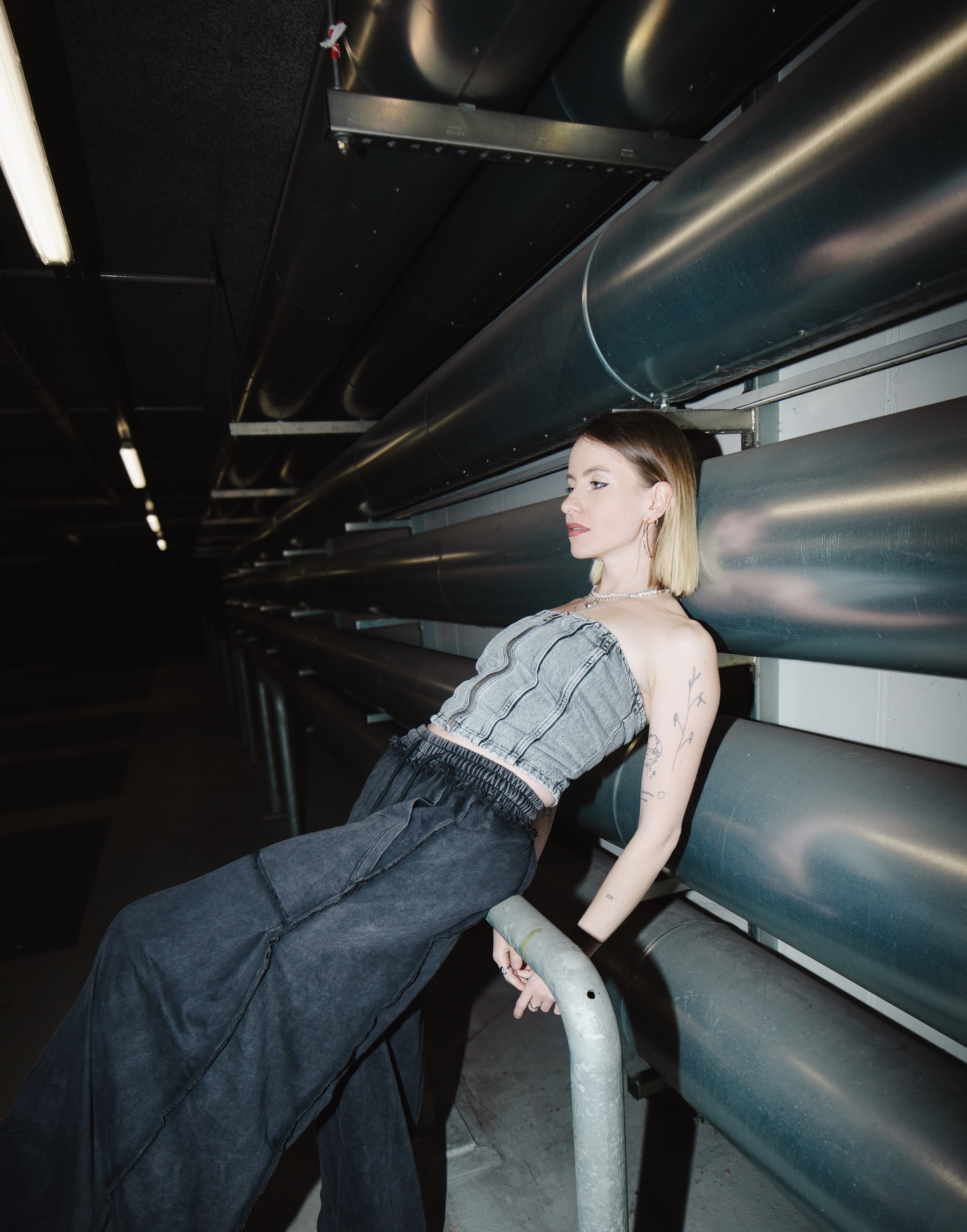
Interview en français en fin d’article.
Can you quickly introduce yourself in a few words for our French audience?
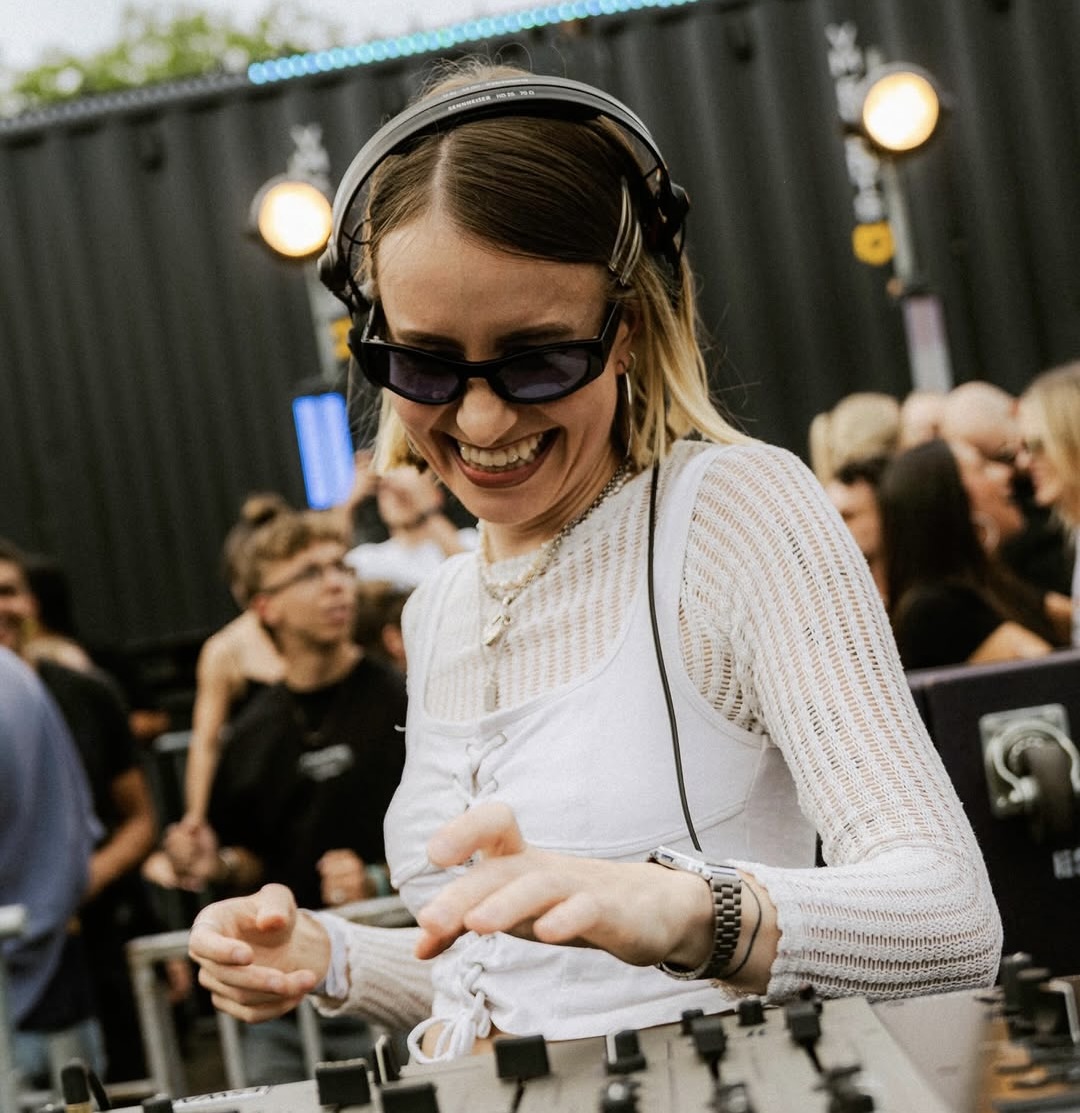
I'm Kiki, known as ÜBERKIKZ. I'm 28 and I am a DJ and producer, even though I still haven't released any track, which will be next year. I would say I'm known for rather hypnotic, raw, minimalistic techno.
You claim a very personal and authentic approach to creating music, where you share a part of yourself. How do you build a set that reflects your entire personality?
I would say, it comes from feeling. Of course, I need a bit of a frame, some playlists with different categories : tribal, tooly, hypnotic, spacy… And I always prepare a deep intro, with vocals carrying a special message or just a track I like. I always want to give people space to get slowly into the journey. But the rest comes naturally during my set, driving by how I feel, how the crowd reacts. So this reflects my personality, a structured approach combined with a spontaneous part.
You said on social media that DJ is ideal for ambivert people. Can you explain why?
Yes, I would say I’m very much in between introvert and extrovert. I love being surrounded by people, but I don't have such a high social battery. And being a DJ solves that because I can be at the center of a social event without having to talk to people I just met, or be socially available to everyone. And especially, I can truly communicate through music. So it’s the perfect role for an ambivert, you can be connected with a clear frame and some distance.
Recently, you talked about the freedom you took during the Unreal party, staying true to your universe even though the crowd came for hardtechno. Can you tell us more about that tension between expressing your style and adapting to the audience?
It's a big privilege for me to be booked on big stages but this tension is one of the core conflicts of being a DJ today. On one hand, you have your own artistic vision. On the other hand, you have a crowd that often comes with expectations: hard, fast, familiar and instantly stimulating sounds. But that’s simply not who I am as an artist. I don't identify myself as an “entertainer”, rather as a curator of an inner journey.
Why do you think this is happening?
Because we actually live in a culture of short attention spans. People are used to skipping songs after 10 seconds, to scrolling and constant stimulation. Social media pressure to deliver viral and “wow” moments. For me, sticking to your own style in that environment is an act of self-respect, but it’s difficult because if you don’t deliver constant peaks, you might lose part of the crowd or be seen as less “marketable.” But my way of playing is not built for that, I believe in a tension curve, not in a flat line of 100% activation. I’d rather protect my artistic authenticity than shape myself around external expectations and validation.
Is this adaptation to the audience a danger in today’s scene?
For me, if you follow the hype instead of your own vision, you might lose yourself in the process. Over time, that creates deeper consequences: loss of identity, anxiety, emotional emptiness, creative block, burnout. You become genuinely unhappy with the way your success is evolving, because it no longer reflects the artist you want to be.
I know DJs who are trapped, because they got successful with a certain sound and now they don't want to play it anymore, but have to because they get booked and paid for it. This is a big fear of mine, but also a motivation: playing what I like rather than what people expect. The risk is when you do what you like and people don’t resonate with it, you can feel rejected. If you only please the crowd, you get only hype or validation in the short term. But it leads to a long-term harm, because you disconnect from your true artistic vision and identity.

We often talk about positive crowd reactions, as support for the artist, widely shared and celebrated in the media. But we don’t talk too much about silence and less engaged crowds. Can you tell us about their impact?
With social media, we’ve almost been trained to read loud reactions and phones in the air as the only valid form of success. But that’s a very limited perspective, because a quieter crowd doesn’t automatically mean disconnection. Sometimes people are deeply immersed and letting themselves feel the sound inside, instead of performing their excitement outwardly. Techno can be very introspective and I experience that a lot, that's why I enjoy both when people are going crazy and when they're calm.
Sometimes, I receive heartfelt messages from people who tell me how special the experience was after. Some meaningful reactions are coming afterwards in private, where people start to process what happened. It's not always about instant loudness.
Do you think today’s scene can create a kind of dependence on feedback?
The hard part for artists is: when you’re constantly exposed to highlight clips and ecstatic crowds on social media, you start being used to it and measure your own value against that. Then a “normal” crowd can suddenly feel like a failure, even if it isn’t. That’s where the dependency comes in and I do think the current scene is creating a dependence on feedback. I talked to many of my DJ colleagues who feel this dependency but not everyone talks about it, because it's a bit personal.
You recently spoke out about the toxic trend, fueled by social media, of glorifying sold-out shows. What’s the impact on artists?
The glorification of “sold-out” shows is a perfect example of how social media and capitalism reshape the culture of techno, while it was against it before. As techno becomes globally visible, it also becomes a product and numbers start to dominate the narrative: ticket sales, reach, followers. This creates pressure on artists and clubs. When every metric becomes public and comparable, it’s easy to internalize the idea that your worth depends on demand. That mindset pushes people into performance mode and the focus shifts somehow. This is so toxic because it can fuel anxiety, imposter syndrome and loss of artistic identity.
Is it becoming impossible to completely detach numbers from art in today's scene?
It’s difficult, because in our system artists are not financially protected. Most of us are self-employed and fully depend on our artistic income so we have to decide economically. Sometimes you play shows because they’re important for financial stability or reference, even if they’re not your ideal artistic scenario. But that’s completely okay and for me it's unfair judging artists for choosing the more economic option, because everyone has different responsibilities.
How do you personally deal with that?
I think living from your art it's a big privilege so it's the price you have to pay somehow, but you need to find a middle path. That's what I'm trying, because ignoring numbers would be naïve in our system but I don’t want them to define my identity or dictate my artistry. I aim to balance sustainability with authenticity. Then I always come back to the point: why do I start to make music first? This always helps me to stay grounded and true to myself.
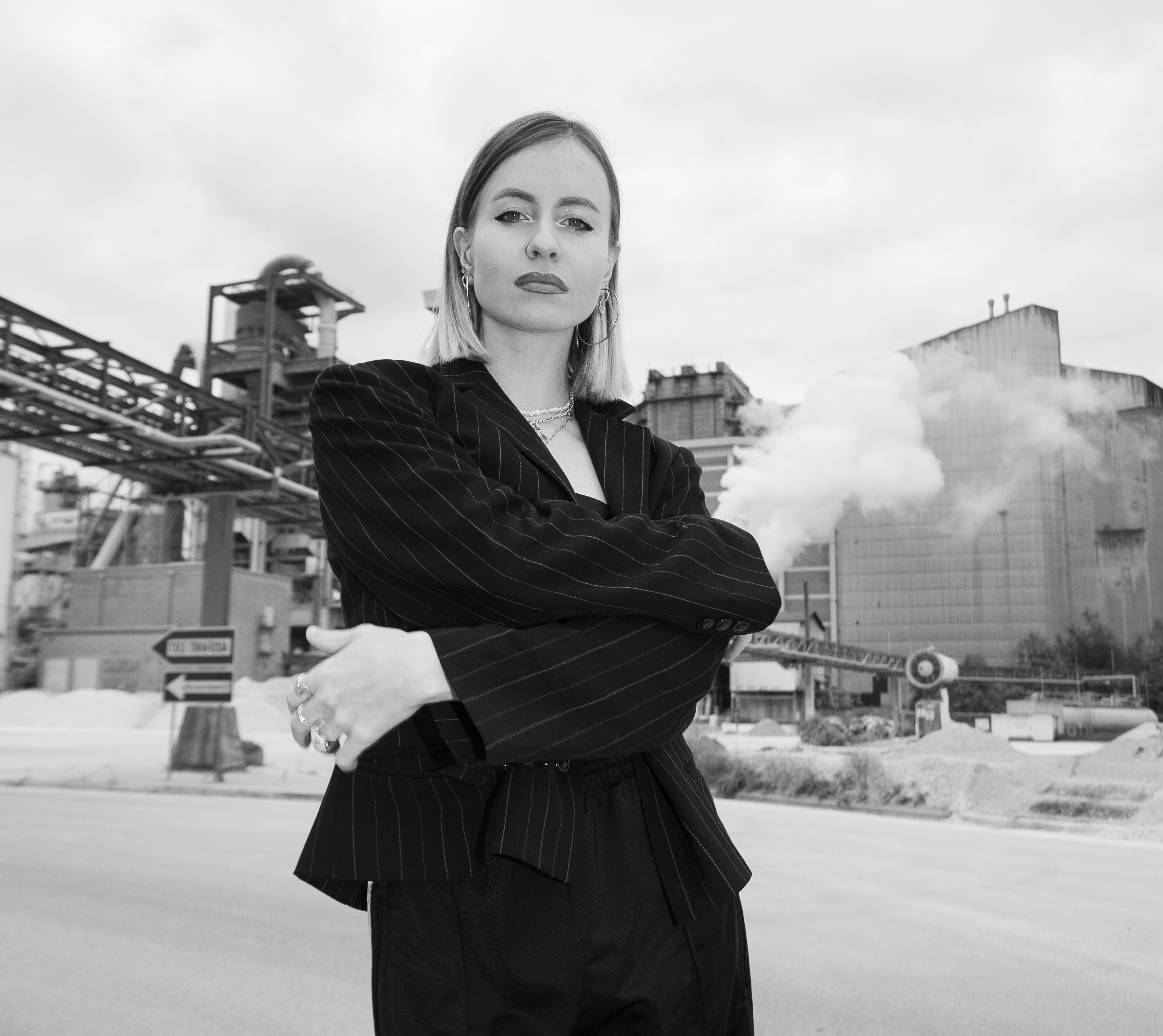
In this industry, we often see support between artists. But you mentioned on social media how hard it is not to compare yourself, and the pressure of competition. What about that?
There is genuine support and solidarity in the scene, but the scene exists in a system that is structurally competitive and you are surrounded by toxic dynamics. The whole structure pushes artists into thinking of each other as benchmarks rather than colleagues.
Actually, your entire career is presented on a scoreboard: who plays where, for whom, how often, who has the most followers, views, clicks, listens... Even if you truly wish the best to others, it's impossible to not compare because social media is just built for that. It’s a human reaction to get insecure when you see someone's getting a booking you wanted, growing faster, going more viral. And you start questioning yourself.
How do you manage that?
By making distance from social media, because when you consume less, you create more. Because you compare less, stay focused on your own thing and have more space for this creative energy. I also always try to check in with myself: Does this feel aligned? Would I play this the same way in a room with no people and no cameras? It’s not possible to remove the comparison, but you can try not to let it drive your decisions.
Also, a lot of people envy the DJ lifestyle for the festive atmosphere, but you recently mentioned the hidden loneliness. Can you tell more about that?
From the outside, the DJ life looks like constant social stimulation. Always at parties, traveling the world and meeting new people all the time. But everyday reality is often the opposite. You travel alone, sit in airports for hours, waiting for delayed flights which feels like a waste of lifetime. You have the opposite schedule to “normal life”, and less real interactions with friends and family because you work while they are free, this is really hard.
The emotional contrast can be very intense: one night, you’re on a stage in front of a packed crowd, with a lot of energy around you. A few hours later, you’re alone in a silent hotel room, in a city where you don’t know anyone. That switch can feel very empty if you don’t have a stable base outside of music. This constant up and down is very intense for the nervous system.
How do you deal with these two extremes?
To cope with that, I try to build structures that have nothing to do with nightlife: things that ground me (sports, cooking, writing) or just having slow days without stimulation. I also try to be very honest with myself about my needs, because I can't live constantly in the “high” of performance and need slowness and emotional safety. Balancing those extremes is an ongoing process, not something you solve once and for all.
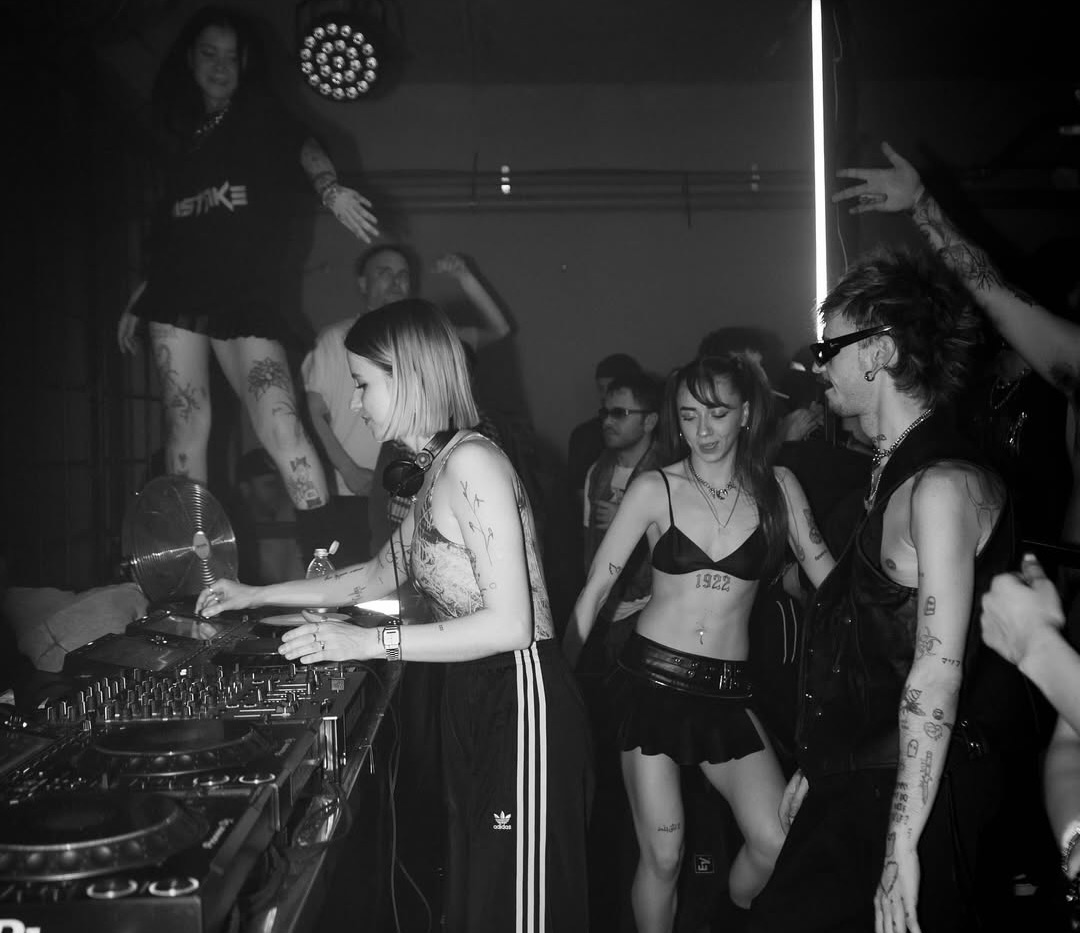
You wrote in one of your posts: "life is happening right now" encouraging people not to stay obsessed with “making it”. Can you develop?
I've never been driven by chasing success, just started making music out of a very deep passion and that “inner fire“ was always enough for me. For a long time, I didn’t think in terms of growth or visibility. I just created. But the pressure only came after: once your name grows, you suddenly get confronted with algorithms and expectations. That was completely new for me, I had to learn how to deal with it.
How do you detach yourself from this?
By returning to my core. Whenever I feel overwhelmed, I remind myself of why I even started in the first place, this always helps me. For me, detaching from success is about staying rooted in the part of me that would still create even if nobody watched. When I give space to that feeling, the present moment becomes meaningful again, and I don’t lose myself in the pressure that comes with the job.
Many people envy the DJ profession because they idealize a job driven by passion. But you mentioned that it can sometimes come from suffering. Could you expand on that?
Passion isn’t always something light and beautiful. Artistic drive born from intensity, which is often connected to pain. Many artists start making music as a survival strategy to process emotions. The risk is to associate creativity only with this chaos: you start thinking it is the most efficient way to create intense and meaningful music. I’m very aware of this dynamic and I try to separate my emotional depth and self-destruction. Passion doesn’t have to mean constantly burning, it can also mean commitment and discipline!
How do you avoid being consumed by it?
For me, the key is emotional and nervous system regulation, also having a life outside of music that keeps me stable. I can still access darkness and depth in my music but I don’t let intensity run my entire life. I always remind myself that I’m a human being first and an artist second. If you destroy the human, there will be no art left.
Also people associate creativity to freedom, but you said that it can also be chaotic. How do you maintain balance? How do you deal with lack of inspiration?
Yes creativity is connected with freedom but that’s true to a certain extent. Creating gives space to your imagination but is unpredictable. Sometimes it flows easily, and sometimes it just disappears without warning. When your job depends on being creative all the time, that unpredictability feels chaotic. For me, balance comes from accepting that creativity has its own rhythm. If I’m blocked, I don’t pressure myself into producing something “useful.”
How do you deal with lack of inspiration?
When I feel creatively blocked, I have two ways to deal with it. Either I just work on older projects, sort out my library or do something not so creative administrative stuff. Or I take distance and focus on real life, go outside, meet friends, do something that is not connected to music. This always helps me to get back, and inspiration returns always when you stop chasing it!
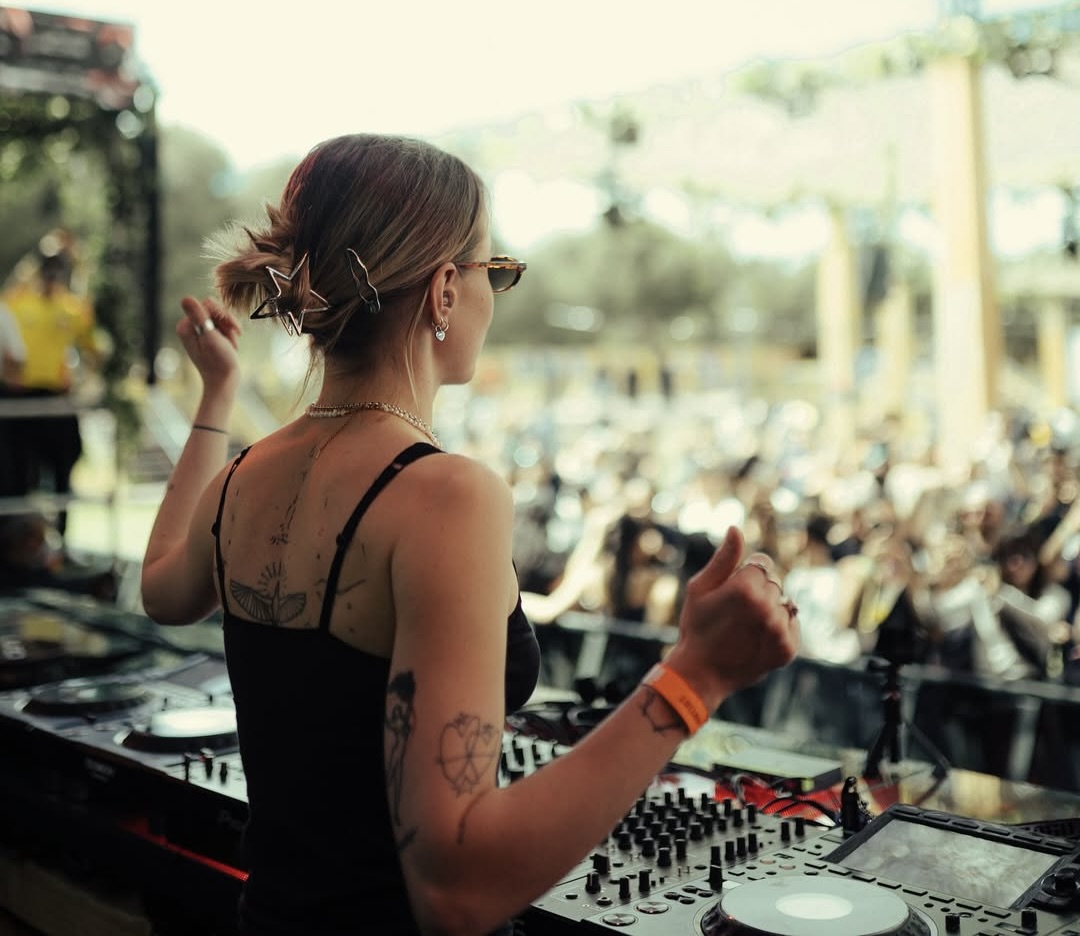
You’ve been a part of a mostly male scene for seven years. How has the industry changed in terms of inclusivity since you started?
There has definitely been progress in visibility comparing to when I started. You see more women and more FLINTA* artists on lineups and the awareness around representation has grown.
But representation is just the first layer and the deeper issues are more subtle: how seriously women are taken, what kind of comments they receive, how often their skills are questioned and how they’re spoken about backstage, their safety... And a lot of this hasn’t changed enough. Real inclusivity isn’t just putting women on line-ups, it's about changing the environment and conditions under which they work.
What are the main obstacles facing a woman DJ today?
One persistent obstacle is the stereotype that female DJs are booked primarily for their looks or their “image.” Even if you’re technically solid, you still hear things your male colleagues will never hear. And there’s a clear double standard: when a woman is confident and ambitious, she’s often labeled as “difficult” or “too much,” while men with the same traits are seen as strong and professional. These dynamics create a kind of invisible pressure that many people outside the industry don’t notice. So structurally and culturally, there’s still a lot of work to do.
What would you like to see evolve to feel more comfortable in today’s scene?
From a gender and safety perspective, I’d like to see more responsibility: safer backstage spaces, better travel conditions, clear protocols against harassment. FLINTA* artists shouldn’t have to choose between career and personal safety.
I would love a shift from pure hype economics to a musical and cultural depth. I wish more focus on being real than going viral, with more patience for long and evolving sets.
On an emotional level, I wish for more honesty. Less pretending that everything is glamorous and effortless. More conversations about mental health, financial realities, and the pressure that comes with this job. The more honest we are, the more human the scene can become.
What are your plans for the future?
Artistically, my main focus is to keep shaping my own identity, as a DJ but also as a producer. I want to develop a sound that’s unmistakably mine, release music that feels like a natural extension of my sets: emotionally deep, intense and very human.
I also want to surround myself with people who resonate with my work and share the same kind of energy, for having a grounded and conscious community where my music should just be the medium that brings people together. For me the goal is depth, not noise.
On a personal level, I want to find a sustainable way of living this life without burning out. I want a career that grows, but never at the cost of my health.
Can you give us three tracks that inspire you?
William Arist - La Selva
I could play this track in every set. It’s the perfect driving, tribal rhythm and also the vocals which tell about the deforestation which is a big problem. As I am also very aware about climate change and nature conservation.
Zisko - Making of a Desire I love the lyrics!
“Losing all the time making of a desire, Nobody can’t hide without facing the fire, Trying to fake your life doesn’t make you stronger, We are here to dance and the vibes are higher.”
Jadu Heart - Burning Hour No Techno, but still a very beautiful and intense meaning.
Interview menée et rédigée par Alice Vasseur.
- - - - - - - - - - - - - - - - - - - - - - - - - - - - - - - - - - - - - - - - - - - - - - - - - - - - - - - - - - - - - - - - - - - -
Peux-tu te présenter en quelques mots pour notre public français ?
Je m’appelle Kiki, connue sous le nom d’ÜBERKIKZ. J’ai 28 ans et je suis DJ et productrice, même si je n’ai pas encore sorti de morceaux, ce sera pour l’année prochaine. On me connaît surtout pour une techno plutôt hypnotique, brute et minimaliste.
Tu revendiques une approche très personnelle et authentique de la création musicale, où tu partages une partie de toi. Comment est-ce que tu construis un set qui reflète ta personnalité ?
Je dirais que tout part du ressenti. Bien sûr, j’ai besoin d’un cadre : des playlists avec différentes catégories: tribal, tooly, hypnotique, spacy… Je prépare toujours une intro assez profonde, avec des voix porteuses d’un message particulier ou simplement un morceau que j’aime beaucoup. J’ai envie de laisser de l’espace aux gens, de leur permettre d’entrer lentement dans le voyage.
Ensuite, le reste se fait naturellement pendant le set, guidé par ce que je ressens et par les réactions du public. C’est ce mélange qui reflète ma personnalité : une approche structurée, combinée à une part de spontanéité.
Tu disais sur les réseaux sociaux que le métier de DJ est idéal pour les personnes ambiverties. Peux-tu expliquer pourquoi ?
Oui, je me situe vraiment entre l’introversion et l’extraversion. J’aime être entourée de monde, mais je n’ai pas une très grande batterie sociale. Être DJ résout ce paradoxe : je peux être au cœur d’un événement public sans avoir à parler à tout le monde ni à être socialement disponible en permanence. Et surtout, je peux communiquer à travers la musique. Donc c’est un rôle parfait pour une personne ambivertie : tu es connectée aux autres, mais dans un cadre défini et avec une certaine distance.
Récemment, tu as évoqué la liberté que tu as prise lors de la soirée Unreal, en restant fidèle à ton univers alors que le public était venu plutôt pour la hardtechno. Peux-tu nous parler de cette tension entre le fait d’exprimer son style et de s’adapter au public ?
C’est un immense privilège pour moi de jouer sur de grandes scènes, mais cette tension fait partie des conflits centraux du métier de DJ aujourd’hui. D’un côté, tu as ta propre vision artistique. De l’autre, un public qui arrive souvent avec des attentes très précises : il faut que ça soit brutal, rapide, familier, quelque chose qui soit immédiatement stimulant. Mais ce n’est tout simplement pas qui je suis en tant qu’artiste. Je ne me définis pas comme une “entertainer”, mais plutôt comme une curatrice d’un voyage intérieur.
Selon toi pourquoi cette tension est-elle si forte aujourd’hui ?
Parce que nous vivons dans une culture de l’attention très courte. Les gens ont l’habitude de zapper un morceau après dix secondes, de scroller sans cesse, d’être soumis à une stimulation permanente. Les réseaux sociaux exercent une pression pour produire des moments viraux, des instants “wow”.
Dans ce contexte, rester fidèle à son style est un acte de respect envers soi-même. Mais c’est difficile car si tu ne proposes pas des pics d’intensité constants, tu risques de perdre une partie du public ou d’être perçue comme moins “commercialisable”. Mais ma manière de jouer n’est pas faite pour ça, elle repose sur une courbe de tension, pas sur une activation constante à 100 %. Je préfère protéger mon authenticité artistique plutôt que de me plier aux attentes extérieures.
Cette adaptation permanente au public représente-t-elle un danger pour la scène actuelle ?
Pour moi, suivre la hype plutôt que sa propre vision, c’est risquer de se perdre. À long terme, cela entraîne des conséquences plus profondes : perte d’identité, anxiété, vide émotionnel, blocage créatif, burn-out... On finit par être profondément malheureux de la manière dont notre succès évolue, parce qu’il ne reflète plus l’artiste que l’on veut être.
Je connais des DJs qui sont piégés là-dedans : ils ont eu du succès avec un son en particulier, qu’ils n’aiment plus autant aujourd’hui mais ils continuent de le jouer, car c’est grâce à lui qu’ils sont bookés et payés. C’est une grande peur pour moi, mais aussi une motivation : jouer ce que j’aime plutôt que ce que l’on attend de moi. Le risque, quand tu joues ce que tu aimes, c’est que ça ne résonne pas toujours avec le public, quand c’est le cas tu peux te sentir rejeté. À l’inverse, si tu ne fais que faire plaisir au public, tu obtiens une validation immédiate mais superficielle. À long terme, cela te coupe de ta véritable vision et identité artistique.
On parle souvent des grosses réactions du public de façon positive, en tant que forme de soutien, mais on parle peu du silence ou des publics moins démonstratifs. Quel impact cela a-t-il ?
Avec les réseaux sociaux, on a presque été conditionnés à considérer que seules les réactions bruyantes et les téléphones levés sont des signes de succès. C’est une vision très limitée. Un public plus calme ne signifie pas forcément une indifférence. Parfois, les gens sont profondément immergés, ils laissent la musique les traverser à l’intérieur plutôt que de manifester leur enthousiasme à l’extérieur. La techno peut être très introspective, et je ressens ça souvent. C’est pour ça que j’aime autant les moments où le public est en folie que quand il est calme.
Il m’arrive aussi de recevoir, après coup, des messages très touchants de personnes qui me racontent à quel point l’expérience a été spéciale pour elles. Certaines réactions prennent du sens plus tard, dans l’intimité, une fois que les gens ont eu le temps de digérer ce qu’ils ont vécu. Tout ne se joue pas dans l’instantanéité.
Penses-tu que la scène actuelle crée une forme de dépendance aux réactions du public ?
Oui. La difficulté pour les artistes, c’est que lorsqu’on est constamment exposé à des extraits de foules en délire et à des moments spectaculaires sur les réseaux, on finit par s’y habituer et par mesurer sa propre valeur à travers cela. Du coup, un public “normal” peut soudain être vécu comme un échec, même si ce n’en est pas un. C’est là que la dépendance s’installe. J’ai parlé avec beaucoup de collègues DJs qui ressentent cela, mais tout le monde n’ose pas en parler, car c’est un sujet un peu plus personnel.
Tu as récemment dénoncé la tendance toxique, amplifiée par les réseaux sociaux, à glorifier les événements “sold out”. Quel est l’impact de cela sur les artistes ?
La glorification des “sold out” est un exemple parfait de la manière dont les réseaux sociaux et le capitalisme transforment la culture de la techno, qui était à l’origine en opposition avec ces logiques. À mesure que la techno devient visible à l’échelle mondiale, elle devient aussi un produit. Les chiffres prennent le dessus : ventes de billets, abonnés, visibilité… Cela crée une pression sur les artistes et les clubs. Quand chaque indicateur devient public et comparable, tu peux facilement en venir à intégrer l’idée que ta valeur dépend de la demande. Cela pousse les artistes dans un mode de performance permanent, et les enjeux changent d’une certaine façon. C’est très toxique car ça alimente l’anxiété, le syndrome de l’imposteur et la perte d’identité artistique.
Est-il devenu impossible de dissocier complètement les chiffres de l’art aujourd’hui ?
C’est difficile oui car dans notre système, les artistes ne sont pas protégés financièrement. La plupart d’entre nous sommes des travailleurs indépendants et dépendons entièrement de nos revenus artistiques. Il faut donc parfois faire des choix économiques. Il arrive que l’on accepte des dates pour des raisons de stabilité financière ou de visibilité, même si ce ne sont pas des scénarios idéaux. Et c’est parfaitement légitime. Je trouve injuste de juger les artistes pour cela, car chacun a des obligations et responsabilités différentes.
Comment fais-tu, personnellement, pour gérer cela ?
Vivre de son art est un immense privilège, et je me dis que c’est en quelque sorte le prix à payer. Mais il faut trouver un juste milieu. Ignorer totalement les chiffres serait naïf, mais je refuse qu’ils définissent mon identité ou dictent mon art. J’essaie de concilier durabilité et authenticité.
Je reviens toujours à la question fondamentale : pourquoi ai-je commencé à faire de la musique ? Cela m’aide à rester ancrée et fidèle à moi-même.
On voit souvent une grande solidarité entre artistes, mais tu as aussi évoqué la difficulté de ne pas se comparer et la pression de la compétition. Qu’en est-il ?
Il existe une vraie solidarité dans la scène, mais elle évolue dans un système structurellement compétitif, imprégné de dynamiques toxiques. Toute la structure pousse les artistes à se comparer aux autres plutôt que de se voir juste comme des collègues.
Ta carrière entière est exposée comme sur un tableau de scores : qui joue où, pour qui, à quelle fréquence, qui a le plus d’abonnés, de vues, de clics. Même si tu souhaites sincèrement le meilleur aux autres, il est presque impossible de ne pas se comparer, car les réseaux sociaux sont conçus pour cela. C’est humain de se sentir insécurisée quand on voit quelqu’un obtenir une date que l’on voulait, évoluer plus vite ou devenir viral. Alors on commence à se remettre en question.
Comment gères-tu cela ?
En prenant de la distance avec les réseaux sociaux. Moins tu consommes, plus tu crées. Car moins tu te compares, plus tu restes concentrée sur ton propre travail et tu libères de l’énergie créative.
Je me pose aussi souvent cette question : est-ce que je me sens alignée avec ce que je fais ? Est-ce que je jouerais de la même manière dans une pièce vide, sans public ni caméras ? On ne peut pas éliminer la comparaison, mais on peut éviter qu’elle gouverne nos décisions.
Beaucoup idéalisent la vie de DJ pour son aspect festif et social, mais tu as évoqué la solitude cachée qui l’accompagne. Peux-tu nous en dire plus ?
De l’extérieur, la vie de DJ semble être une stimulation sociale permanente : des fêtes, des voyages, des rencontres constantes. Mais le quotidien est souvent l’inverse. On voyage seul, on passe des heures dans les aéroports, on attend des vols retardés avec l’impression de perdre du temps. On a aussi un rythme complètement décalé par rapport à un mode de vie “normal”, ce qui réduit les interactions réelles avec ses amis et sa famille, puisqu’on travaille quand les autres sont libres. Ce qui est difficile à vivre.
Le contraste émotionnel est très fort : une nuit, tu es sur scène devant une foule immense, portée par une énergie intense. Quelques heures plus tard, tu te retrouves seule dans une chambre d’hôtel silencieuse, dans une ville où tu ne connais personne. Si tu n’as pas de base stable en dehors de la musique, ce vide peut être très violent. Ces montagnes russes sont éprouvantes pour le système nerveux.
Comment gères-tu ces deux extrêmes ?
J’essaie de construire des structures qui n’ont rien à voir avec la fête : des activités qui m’ancrent dans le réel, comme le sport, la cuisine, l’écriture, ou simplement des journées lentes sans stimulation. J’essaie aussi d’être très honnête avec moi-même sur mes besoins. Je ne peux pas vivre en permanence dans la surstimulation de la performance. J’ai besoin de calme et de repos émotionnel. Trouver l’équilibre entre ces extrêmes est un processus continu.
Tu as écrit sous un de tes posts Instagram : “life is happening right now”, invitant à ne pas rester obsédé par la réussite. Peux-tu développer ?
Je n’ai jamais été motivée par la recherche du succès. J’ai commencé à faire de la musique par passion profonde, et ce feu intérieur me suffisait. Pendant longtemps, je ne pensais ni en termes de croissance ni de visibilité. Je créais, tout simplement.
La pression est venue après, quand mon nom a commencé à circuler. Là, je me suis retrouvée confrontée aux algorithmes et aux attentes, ce qui était complètement nouveau pour moi. J’ai dû apprendre à gérer cela.
Comment parviens-tu à t’en détacher ?
En revenant à l’essentiel. Quand je me sens dépassée, je me rappelle pourquoi j’ai commencé. Cela m’aide toujours. Pour moi, se détacher du succès, c’est rester connectée à la part de moi qui créerait même si personne ne regardait. Quand je donne de l’espace à cette partie de moi, le présent redevient significatif et je ne me perds plus dans la pression liée au métier.
Beaucoup envient le métier de DJ car il s’agit d’un métier-passion, mais tu dis que cette passion est parfois intimement liée à la souffrance. Peux-tu nous expliquer ?
La passion n’est pas toujours légère ou belle. L’élan artistique naît souvent de l’intensité, qui est souvent liée à la douleur. Beaucoup d’artistes utilisent la musique comme un moyen de survie, pour traverser leurs émotions. Le danger, c’est d’associer la créativité uniquement à ce chaos, et de croire que c’est la seule façon légitime de produire une musique intense et signifiante. J’ai conscience de cette dynamique et j’essaie de dissocier profondeur émotionnelle et autodestruction. La passion ne signifie pas forcément se consumer : elle peut aussi rimer avec engagement et discipline.
Comment éviter d’être submergé par cette intensité ?
Pour moi, la clé réside dans la régulation du système nerveux et émotionnel, et dans le fait d’avoir une vie stable en dehors de la musique. Je peux accéder à la profondeur et à l’obscurité dans mon art sans laisser cette intensité gouverner toute mon existence. Je me rappelle toujours que je suis humaine avant d’être artiste. Et si l’humain est détruit, il n’y a plus d’art.
On associe souvent la créativité à la liberté, mais tu dis qu’elle peut aussi être chaotique. Comment maintiens-tu l’équilibre ?
La créativité est liée à la liberté, mais seulement jusqu’à un certain point. Elle laisse place à l’imagination, mais elle est imprévisible. Parfois, tout coule de source, et parfois, tout disparaît sans prévenir. Quand ton travail dépend de ta créativité, cette imprévisibilité peut devenir angoissante. Pour moi, l’équilibre vient de l’acceptation de ce rythme spécifique propre à la créativité. Quand je suis bloquée, je ne me force pas à produire quelque chose pour être “rentable”.
Que fais-tu en cas de manque d’inspiration ?
Soit je travaille sur d’anciens projets, je range ma bibliothèque, ou je fais des tâches plus administratives. Soit je prends de la distance et je me reconnecte à la vie réelle : sortir, voir des amis, faire quelque chose sans lien avec la musique. L’inspiration revient toujours quand on arrête de la poursuivre.
Tu évolues depuis sept ans dans une scène majoritairement masculine. Comment as-tu vu l’industrie évoluer en termes d’inclusivité ?
Il y a clairement eu des progrès en matière de visibilité par rapport à mes débuts. On voit davantage de femmes et d’artistes FLINTA* sur les line-ups, et la question de la représentation est plus présente.
Mais la représentation n’est que la première couche. Les problèmes plus profonds sont plus subtils : la manière dont les femmes sont prises au sérieux, les remarques qu’elles reçoivent, la remise en question constante de leurs compétences, les discussions en backstage, la sécurité… Et sur ces aspects-là, le changement reste insuffisant. La véritable inclusivité ne consiste pas juste à mettre des femmes sur les lin-ups, mais à changer les conditions et l’environnement dans lesquels elles travaillent.
Quels sont aujourd’hui les principaux obstacles pour une DJ ?
Un obstacle persistant est le stéréotype selon lequel les DJs femmes seraient avant tout bookées pour leur apparence ou leur image. Même lorsque tu es techniquement solide, tu entends des choses que tes collègues masculins n’entendront jamais. Il existe aussi un double standard injuste : une femme confiante et ambitieuse est souvent qualifiée de “difficile” ou de “trop”, là où un homme sera perçu comme professionnel et affirmé. Ces dynamiques créent une pression invisible que de nombreuses personnes extérieures à l’industrie ne voient pas. Il reste donc énormément de travail, à la fois d’un point de vue structurel et culturel.
Qu’aimerais-tu voir évoluer pour te sentir plus à l’aise dans la scène actuelle ?
Du point de vue du genre et de la sécurité, j’aimerais voir plus de responsabilités : des backstages plus sûrs, de meilleures conditions de déplacement, des protocoles clairs contre le harcèlement. Les artistes FLINTA* ne devraient jamais avoir à choisir entre leur carrière et leur sécurité personnelle.
J’aimerais aussi un glissement de “l’économie de la hype médiatique” vers une plus grande profondeur musicale et culturelle. Davantage d’authenticité, moins d’obsession pour le viral, et plus de patience pour des sets longs et évolutifs.
Sur le plan émotionnel, j’aimerais plus d’honnêteté : moins de façades, moins de glamour forcé. Plus de discussions autour de la santé mentale, des réalités financières et de la pression liée à ce métier. Plus on est honnête, plus la scène peut redevenir humaine.
Quels sont tes projets pour l’avenir ?
Artistiquement, mon objectif principal est de continuer à affiner mon identité, à la fois comme DJ et comme productrice. Je veux développer un son qui soit immédiatement reconnaissable, sortir des morceaux qui soient une prolongation naturelle de mes sets : émotionnels, intenses et profondément humains.
Je souhaite aussi m’entourer de personnes qui résonnent avec mon travail et partagent la même énergie, afin de créer une communauté consciente et ancrée, où la musique serait le médium qui rassemble. Mon objectif est la profondeur, pas le bruit.
Sur le plan personnel, je veux trouver une manière durable de vivre cette vie sans m’épuiser. Je souhaite une carrière qui évolue, mais jamais au détriment de ma santé.
Peux-tu nous partager trois morceaux qui t’inspirent ?
William Arist – La Selva
Je pourrais jouer ce morceau dans chacun de mes sets. Il a ce rythme tribal, puissant, et des voix qui parlent de la déforestation, un sujet qui me touche particulièrement car je suis très sensible aux enjeux climatiques et à la protection de la nature.
Zisko – Making of a Desire
J’adore les paroles : “Losing all the time making of a desire, Nobody can’t hide without facing the fire, Trying to fake your life doesn’t make you stronger, We are here to dance and the vibes are higher.”
Jadu Heart – Burning Hour
Ce n’est pas de la techno, mais le morceau est d’une grande beauté et porte une intensité émotionnelle très forte.



.jpg)

